Ref: https://learn.cantrill.io/courses/1820301/lectures/41301618 and https://www.udemy.com/course/aws-certified-cloud-practitioner-new/learn/lecture/20054392
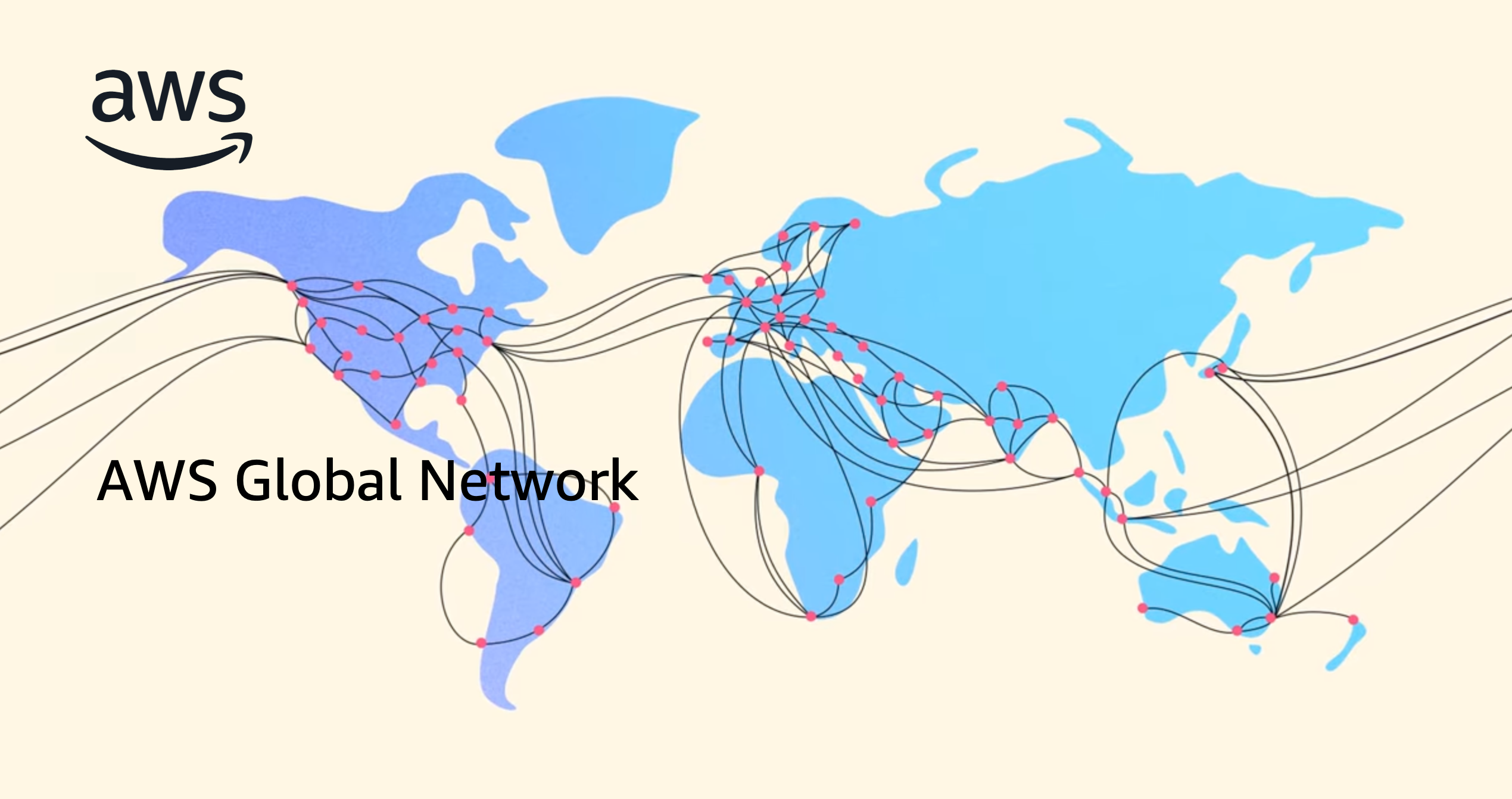
AWS Global Network
AWS Infrastructure Groupings

- 💡 This diagram shows three AWS Regions in the US west coast, each containing multiple Availability Zones (AZs). Zooming into N. California (
us-west-1) reveals three AZs (us-west-1a, us-west-1b, us-west-1c), each representing a group of data centers. The pink dots are edge locations or points-of-presence (PoPs).
AWS Region
- 🔧 Geographical area with full AWS infrastructure (compute, storage, DB, AI, analytics…)
- E.g. The Asia Pacific (Sydney) region, or
ap-southeast-2 region
- “Asia Pacific (Sydney)” = region name ↔
ap-southeast-2 = region code
- ‼️ Does not equate to states, countries, nor continents!
- The region area is selected/created by AWS to deploy their infrastructure
- Regions are interconnected with each other at high speeds
- Regions allow design of products that can withstand global disasters
- Even if a whole region has an outage, products can run from a different region
- A region must be specified when interacting with a non-global AWS service
- Global services (e.g. IAM) do not need to specify a region
- 🔧 3 main benefits:
- 👍 Geographic separation → Isolated Fault Domain (stability & resilience)
- If a region has an outage, products will only experience outage in that region
- 👍 Geopolitical separation → Different Governance
- Data in a region is affected by the laws of the country where the region is located
- Data does NOT move between regions unless you configure/allow AWS to do so
- 👍 Location control → Performance
- Deploy product closer to users → lower latency and higher performance
- Considerations when choosing region(s) for your app/infrastructure
- Compliance to data regulations → e.g. if data generated in EU must stay in EU
- Latency → infrastructure closer to end users means lower latency, better performance, better user experience (UX)
- Available services → Not all services are supported in all regions!
- Pricing → certain regions will have different pricing for certain services (but most services have a similar pricing no matter the region)
AWS Availability Zone (AZ)